

By: VSDIEA Industry Insights Team | Date: April 30, 2026
Table of Contents
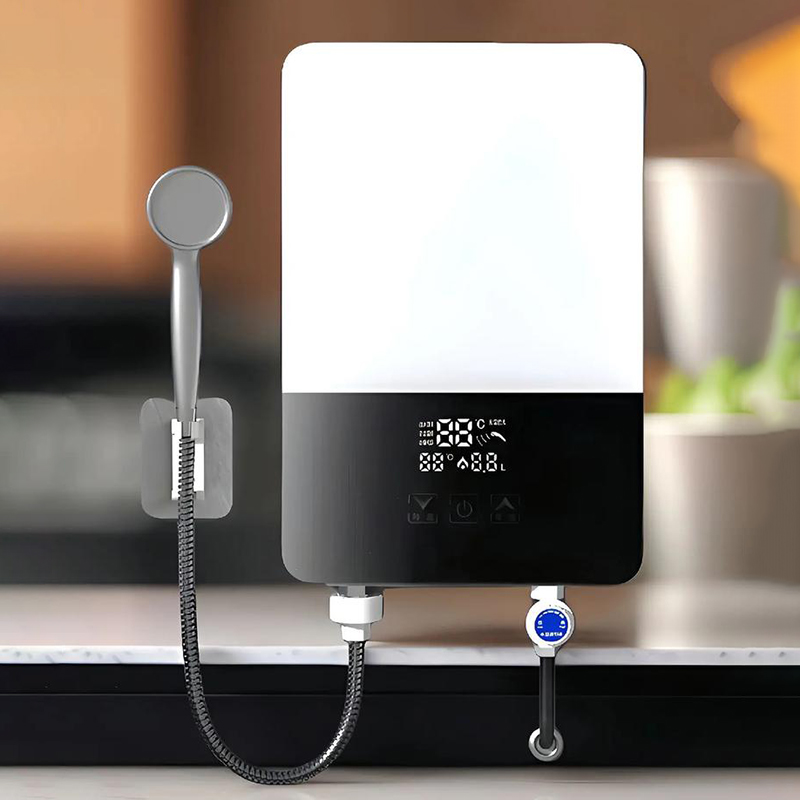
Federal Funding Targets Water Heater Supply Chain
In a decisive move to strengthen the domestic clean energy supply chain, the U.S. Department of Energy (DOE) announced a $45 million funding opportunity on April 22, 2026, specifically aimed at expanding and modernizing the manufacturing of energy-efficient electric appliances—with instant, tankless, and smart electric water heaters listed as primary categories. The initiative, part of the broader “Building a Better Grid” and “Energy Efficient Homes” programs, is designed to reduce reliance on foreign components while accelerating the adoption of grid-interactive, high-efficiency water heating technologies across the United States.
According to the DOE announcement, eligible projects include the installation of automated production lines, robotic assembly systems, and in-line quality testing equipment for tankless water heaters and smart heat pump water heaters. Priority will be given to manufacturers that integrate real-time energy monitoring (IIoT) and demand-response capabilities into their products. “This investment isn't just about making more water heaters—it's about making smarter ones that communicate with the grid and save consumers money,” said a senior DOE official during a press briefing. The funding is expected to directly create over 1,200 advanced manufacturing jobs and boost domestic production capacity by an estimated 25% for these appliance categories by early 2028.
Industry Data: The Efficiency and Grid-Stability Mandate
The DOE's focus comes as new market data underscores a pivotal shift. A recent report from the Association of Home Appliance Manufacturers (AHAM, April 2026 analysis) indicates that shipments of instant/tankless electric water heaters grew 18% year-over-year in Q1 2026, while smart-enabled water heaters (with Wi-Fi, usage learning, or time-of-use optimization) now account for nearly 32% of all premium electric water heater sales in U.S. key markets (California, Texas, New York). Analysts at Guidehouse Insights project the U.S. smart water heater market will grow from $1.2 billion in 2025 to $3.8 billion by 2030, driven by utility rebate programs and updated Energy Star criteria expected later this year.
Statistically, modern tankless electric units achieve 99% thermal efficiency compared to storage heaters at 65-75%, potentially saving the average U.S. household $100-$150 annually on electricity. However, the DOE notes that without domestic manufacturing scale, current lead times for components (e.g., flow sensors, IGBT modules, smart controllers) extend to 30+ weeks. The $45M injection specifically targets these component-level bottlenecks, with a requirement that 60% of bill of materials cost originate within the U.S. or from free-trade partners.
Case Studies: US Manufacturers Automate for IIoT Era
Two established U.S.-based appliance manufacturers have already announced matching investments aligned with the DOE funding template, providing concrete examples of how automation and IIoT are reshaping water heater production.
Case Study 1: Rheem Manufacturing (Montgomery, AL) – On April 23, 2026, Rheem disclosed a $28 million expansion of its tankless water heater production line, integrating collaborative robots (cobots) and machine vision systems for precision soldering of copper heat exchangers. The new line, expected operational by Q3 2027, will produce 400,000 units annually of the “Professional Prestige” series tankless electric models, all equipped with embedded IIoT modules for predictive maintenance and grid-load balancing. “We're moving from mass production to mass customization,” a Rheem automation manager stated in a press release. “The new line can switch between six model variants with zero downtime, directly responding to utility demand response signals.”
Case Study 2: A. O. Smith Corporation (Milwaukee, WI) – A. O. Smith announced on April 20, 2026, that its “SmartTank” production facility will see a $15.5 million upgrade featuring 5G-connected automated guided vehicles (AGVs) and real-time digital twins of the assembly process. The focus is on their new “Voltex” series of hybrid smart water heaters, which learns household usage patterns. The digital twin system, provided by Siemens, reduced changeover time from 4 hours to 18 minutes. “Our investment shows that smart water heater manufacturing is now an advanced robotics and software industry, not just metal bending,” said the VP of operations. The facility expects to double output of smart-enabled units by June 2027.
Expert Analysis: Reshoring and the Smart Home Shift
Industry analysts view the DOE’s move as a strategic pivot to secure the residential energy interface. Dr. Elena Vasquez, Senior Analyst for Energy Technology at BloombergNEF, commented exclusively to VSDIEA: “Water heaters are the largest single energy load in most U.S. homes outside of HVAC. The DOE is effectively bankrolling the creation of a flexible, virtual power plant (VPP) from the factory floor up. Smart, instant water heaters with IIoT can shift their operation by hours without user noticing—that’s grid gold.”
From a market perspective, Mark Delaney, Director of Home Automation Research at Parks Associates, added: “The manufacturers we survey are seeing consumer demand for ‘instant + smart’ rise fastest among homeowners under 40. Between the DOE funding and state-level rebates (California’s Title 24, New York’s Clean Heat program), the payback period for a premium smart tankless unit has dropped from ~7 years to under 4 years in many cases. Reshoring component manufacturing, as this DOE funding promotes, will further reduce costs by cutting logistics fees and tariffs.”
Both experts note a potential challenge: integration standards. Currently, no universal communication protocol exists between smart water heaters and the dozens of home energy management platforms. The DOE funding guidance includes $4 million specifically for “open-source connectivity software” to solve this, a clear recognition from regulators that proprietary lock-in stifles adoption.
Forward-Looking: Industry 4.0, IIoT, and Predictive Water Heating
The $45 million federal investment signals a clear direction for the water heater industry over the next 3-5 years, aligning with Industry 4.0 principles. Three specific trends are emerging as immediate outcomes:
1. Predictive Manufacturing: The use of AI on the assembly line to pre-emptively adjust robotic calibration based on real-time sensor data. Early adopters like State Water Heaters (a division of A. O. Smith) are reporting a 40% reduction in post-assembly defects using this approach.
2. Water Heater as a Service (WHaaS): With IIoT modules standard, manufacturers can move to subscription models for “endless hot water assurance,” remote troubleshooting, and dynamic carbon-aware heating. As one Rheem executive put it, “We’re selling hot water, not boxes. Predictive analytics tell us a component might fail in 60 days, so we ship a technician with the part pre-diagnosed.”
3. Grid-Interactive Instant Units: Future instant electric water heaters will automatically raise setpoint temperature (storing thermal energy) during periods of low electricity prices or high solar/wind generation. The DOE’s Loan Programs Office is expected to announce an additional $80M in conditional commitments for factories building units capable of this “thermal battery” function by August 2026.
For distributors and retailers, the implications are clear: Skilled labor capable of configuring IIoT-enabled units and connecting them to home networks will be a premium service offering. Manufacturers like VSDIEA partners who already invest in automated, flexible production lines (such as your 5,000 sqm facility with robotic assembly and testing) are precisely the global suppliers best positioned to meet this new wave of US demand — provided they can demonstrate compliance with the DOE’s upcoming “Smart Water Heater Connectivity Standard” (expected draft by Q1 2027).